Partnerships are the highest-leverage growth channel most teams underuse. A single creator, journalist or complementary brand can put you in front of an audience that already trusts them: warm reach you could never buy at the same price. The problem has never been the idea of partnerships. It's the finding: who's actually influential in your niche, who's worth your time, and who's a follower-count mirage.
The mirage is common enough to have been measured. According to Pew Research Center's "Contending with the 80/20 rule when studying online behavior", "the most active 10% of Twitter users produce 80% of all tweets from U.S. adults", so volume and reach are two different things and neither one is influence.
Social listening turns that guesswork into a repeatable process. Instead of scrolling hashtags and hoping, you watch the real conversation in your category, rank the people driving it, and build a shortlist you can act on. This guide is the playbook, written for marketers who want partnerships to become a channel, not a one-off.
What is partner discovery through social listening?
Partner discovery through social listening is the practice of monitoring the public conversation in your niche, then ranking the people and accounts behind it by reach, relevance and engagement, so you can identify the creators, journalists and brands worth partnering with. Rather than buying a static influencer database, you surface the voices who are already talking about your topic, right now, in the words your audience uses.
It works because influence is contextual. The right partner isn't the one with the most followers. It's the one with the most relevant followers and a track record of showing up in your space. Listening is how you measure that.
Why partnerships are worth the effort
Before the how, here's the why, because it changes who you look for:
- Borrowed trust. A recommendation from someone the audience already follows converts far better than an ad they've learned to ignore.
- Compounding reach. Buy an ad and the reach stops when the budget does. A good partnership keeps paying back in content, backlinks and word of mouth.
- Credibility by association. Being mentioned by a respected practitioner or covered by a niche outlet signals legitimacy to everyone watching.
- Lower cost per warm impression. Micro-creators and niche journalists are dramatically cheaper than broad paid media, and often more effective.
The catch: all of that depends on picking the right people. That's where the process earns its keep.
The playbook: from niche to shortlist
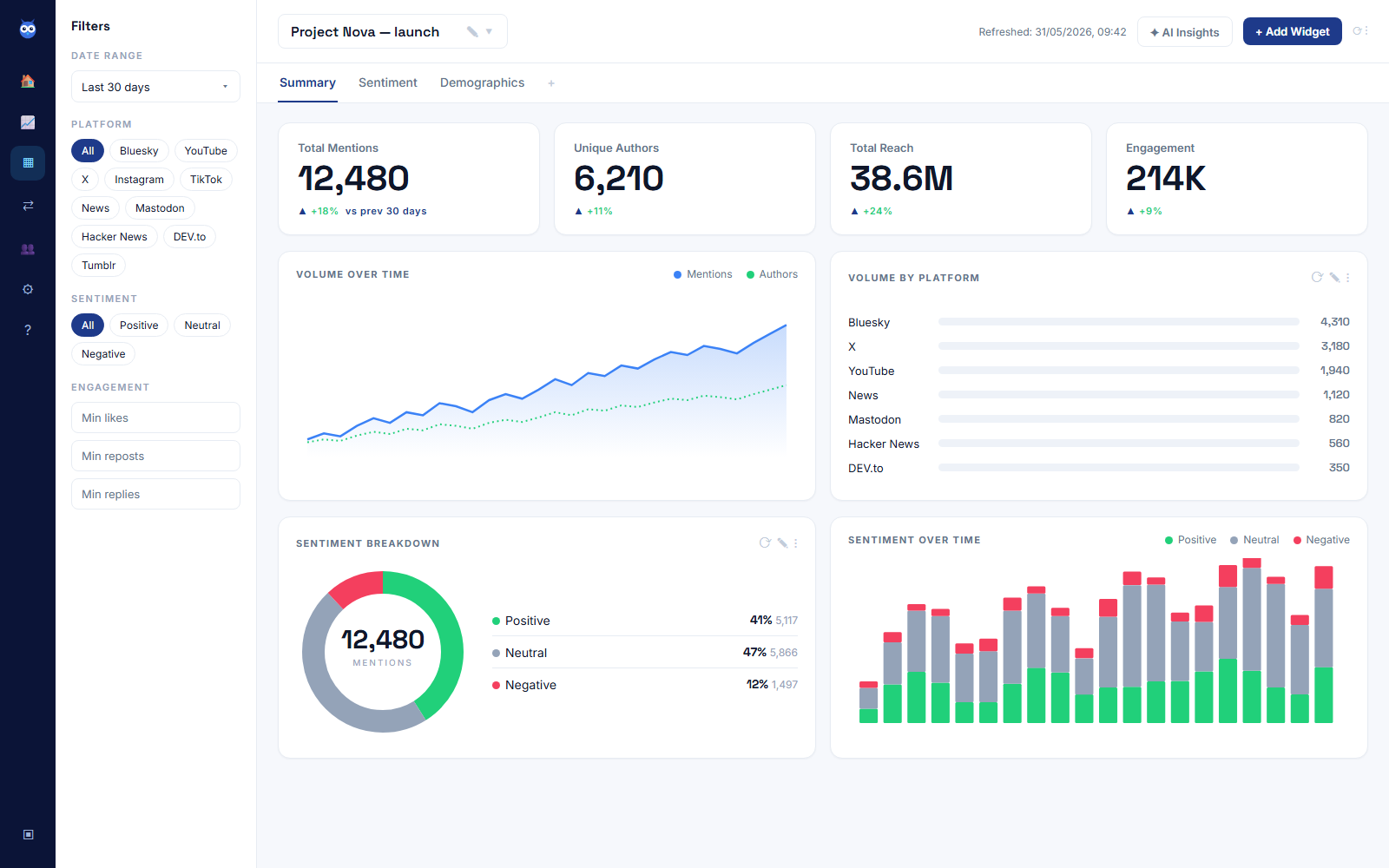
Step 1: Monitor your niche, not just your name
Your future partners aren't searching for your brand yet. They're talking about your topic. So set up a monitor for the category you're in: the problem you solve, the adjacent products, the recurring hashtags and the language your audience actually uses.
Use a proper Boolean query (AND, OR, NOT, exact phrases and hashtags) so you capture the whole conversation and exclude the lookalikes. Babel42 fans that single query out across the networks where partners live: Bluesky, X, YouTube, Twitch, Instagram, Mastodon, Tumblr, Hacker News, DEV.to, Stack Exchange and the news. Each is reached on its own terms, from Bluesky's open firehose and Hacker News's open API to X's per-request billing. Now every relevant voice flows into one place.
Step 2: Open the leaderboard and sort by reach
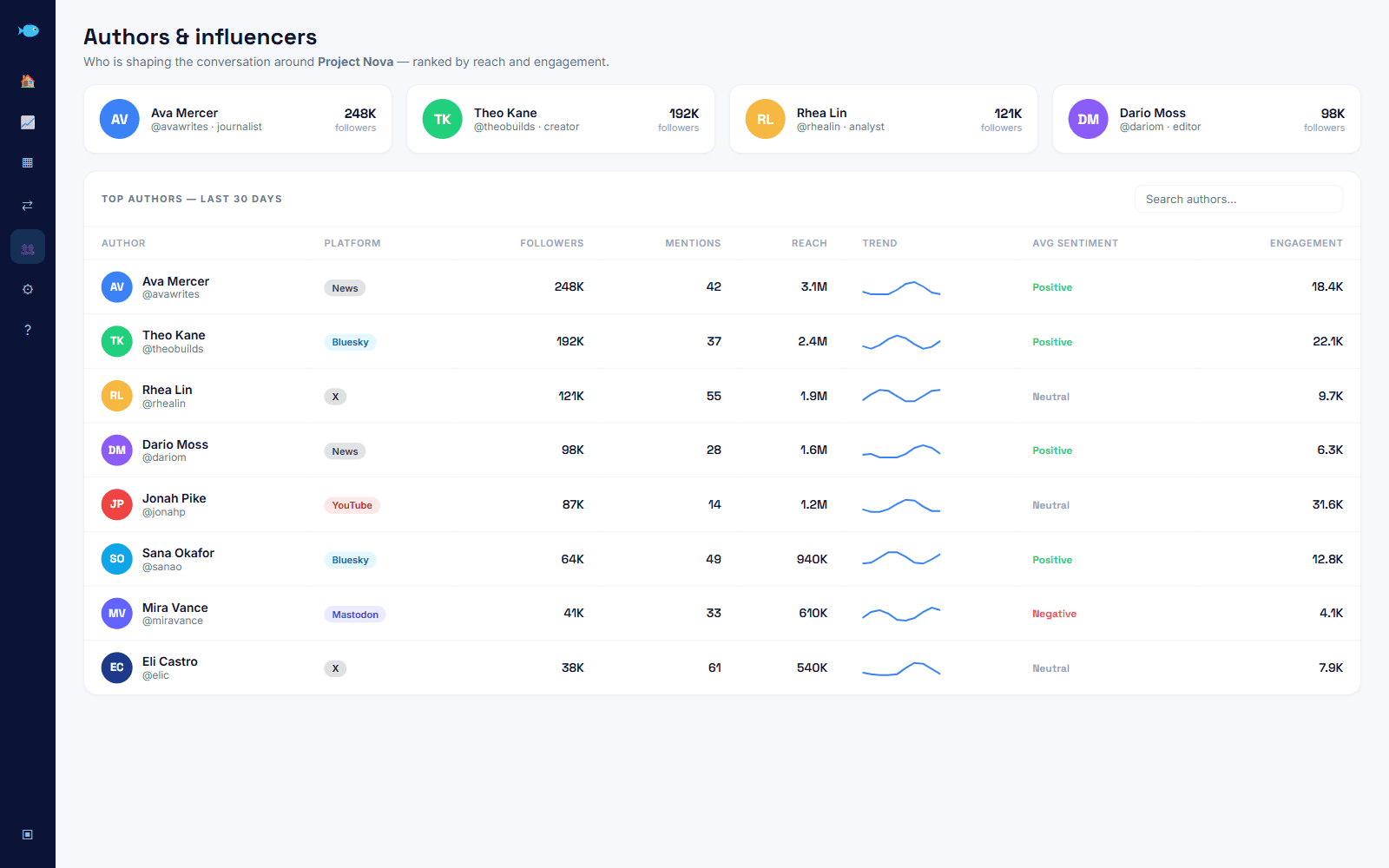
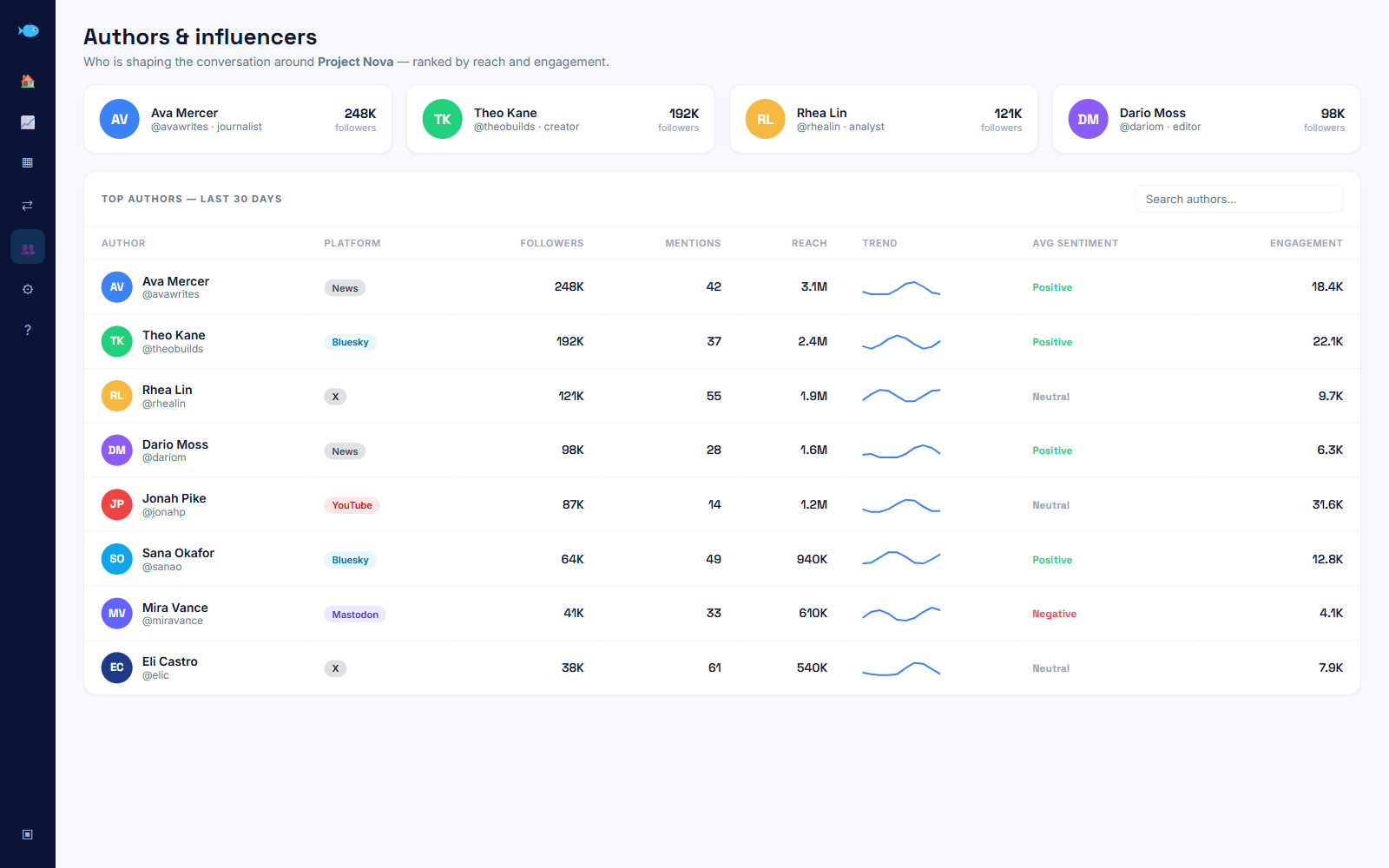
As mentions accumulate, the people behind them surface on the Authors view, your live leaderboard of everyone shaping the conversation. This is where discovery gets mechanical:
- Search by handle or name to check a specific account.
- Filter by platform to focus where your campaign will run, for example only YouTube creators or only Bluesky voices.
- Sort by Reach to lead with the biggest audiences, or sort by Mentions to find the people who show up in your niche most often (frequency is a strong signal of genuine relevance).
Sorting by mentions first is a marketer's trick: it floats the people who consistently talk about your space to the top, not just whoever happens to have the largest following.
Step 3: Read the influence score
Every author carries an Influence score out of 100, so you can compare apples to apples at a glance. The score weighs three things that matter for partnerships:
- Reach: the size of their following.
- Relevance: how often they appear in your niche's conversation.
- Engagement: whether people actually interact with what they post.
A high follower count with low engagement and few topic mentions scores lower than a sharp micro-creator who posts about your space constantly and gets real replies. That's the point: the score rewards the partners who'll actually move your audience, not vanity metrics. As a rule of thumb, treat 70+ as a strong, well-rounded fit and use the mid-range as your pool of promising micro-partners.
Step 4: Vet before you reach out
A name on a leaderboard isn't a partner yet. Click into anyone to vet them properly:
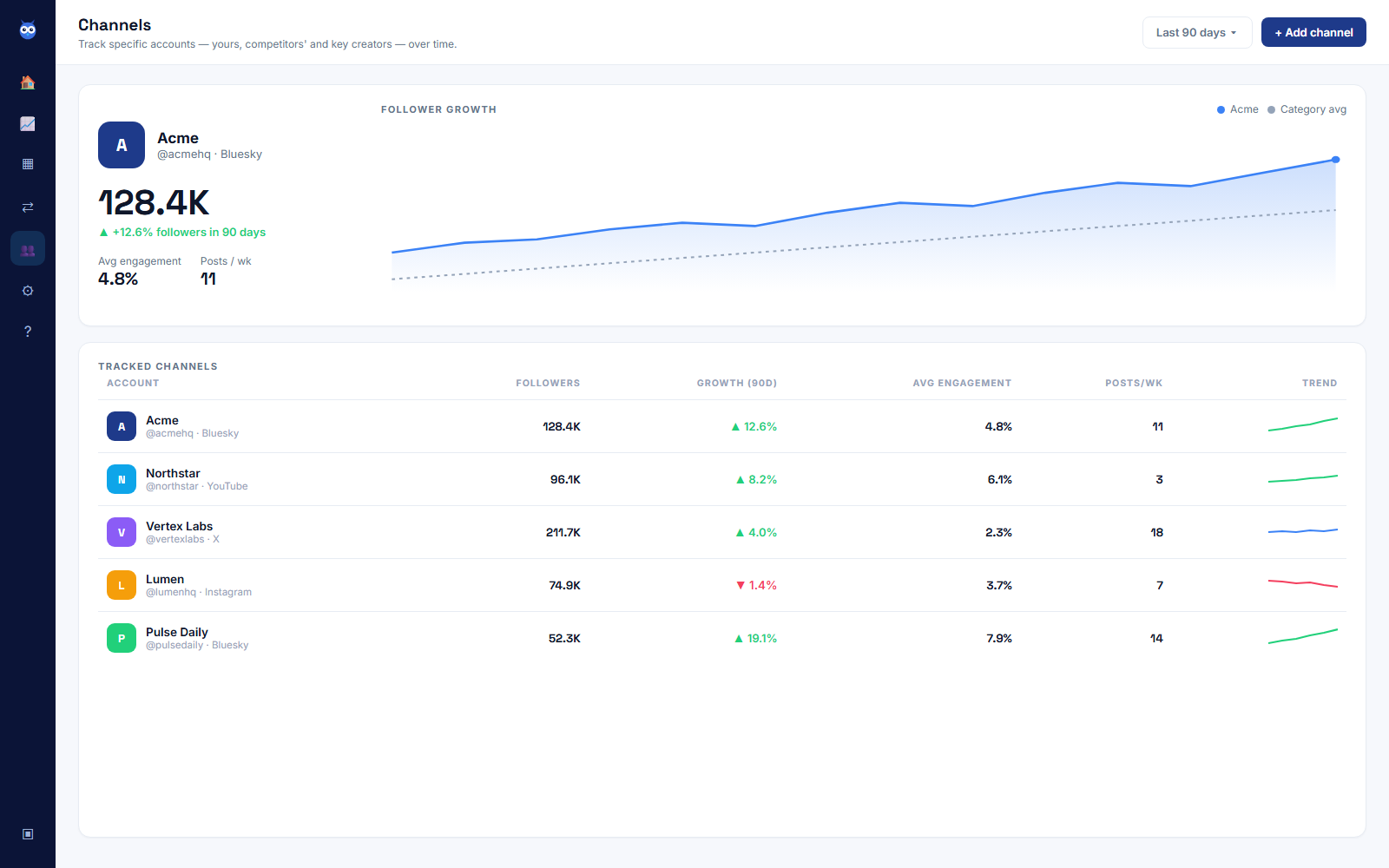
- See their follower growth over time: is their audience climbing, flat or fading? Rising creators are the bargains; you want them before everyone else does.
- Read their recent posts and the sentiment of what they publish, sorted by engagement, so you can judge tone and angle.
- Add a serious candidate as a Channel and Babel42 will track their followers, posting cadence and engagement week on week, so you can watch a shortlist mature before committing budget.
Step 5: Build your shortlist as an outreach list
When someone passes the vetting, save them to an outreach list, a reusable shortlist you can come back to and act on. Group them however your campaign thinks: "Launch creators," "Niche journalists," "Q3 collabs." You can export the list to CSV to drop straight into your outreach workflow, CRM or a brief for the team.
This is the asset the whole process produces: not a vague sense of "we should do influencer stuff," but a named, ranked, vetted list of people worth pitching.
Step 6: Reach out with relevance, then measure
The best outreach feels like you've been reading their work for months, because you have. One thing to settle before any money or free product changes hands: a paid or gifted partnership has to be disclosed, and the rules are more specific than most people assume. The US Federal Trade Commission's "Endorsement Guides: What People Are Asking" is the plain-language version, and it covers the brand as well as the creator. Lead with the angle they actually care about, reference something specific they posted, and make the collaboration about their audience, not your feature list.
After a partnership goes live, the same tooling proves it worked: watch for the lift in mentions, reach and positive sentiment around the collaboration, and track the partner's channel for the bump. Now partnerships have a feedback loop, and you know which kinds of partners to double down on.
Who you'll find and how to use them
| Partner type | What they're worth | How to spot them |
|---|---|---|
| Creators | Warm reach to an engaged niche audience | High engagement + frequent topic mentions |
| Journalists & outlets | Credibility and durable backlinks | Recurring author in news + high reach |
| Practitioners / insiders | Trust from the people others copy | Strong engagement, respected in-niche voice |
| Complementary brands | Shared audiences, co-marketing | Active accounts adjacent to your category |
Common mistakes to avoid
- Chasing follower counts. Reach without relevance or engagement is expensive noise. Let the influence score and mention frequency guide you.
- Pitching before reading. Generic outreach is why most partnership emails get ignored. Vet first; the conversation history tells you the angle.
- Watching one platform. Your best partner might live on Bluesky, YouTube or a niche forum, not the network you personally use. Cast the query wide.
- Treating it as one-and-done. Keep the monitor running. New voices rise constantly, and the early movers are the best-value partners.
Frequently asked questions
How do I find influencers in my niche? Set up a topic monitor for your category, let the mentions collect, then open the Authors leaderboard and sort by reach or by how often each person appears in the conversation. The people who consistently show up are your niche's influencers.
What's a good influence score? The score runs from 0 to 100 and blends reach, relevance and engagement. A score of 70+ signals a strong, well-rounded fit; the mid-range is a fertile pool of micro-partners who are often the best value.
How is this different from an influencer database? A database is a static list of accounts. Social listening surfaces the people actively talking about your topic right now, ranks them by real engagement and relevance, and lets you vet their growth before you reach out, so your shortlist reflects today's conversation, not last year's.
Can I keep track of partners after I find them? Yes. Save candidates to reusable outreach lists, export them to CSV, and add the serious ones as Channels to monitor their follower and engagement growth over time.
Partnerships stop being luck when you make finding them a process. Listen to your niche, rank the voices, read the score, vet the growth, and build a shortlist worth pitching. Babel42's topic monitors, author rankings and channel tracking are built for exactly this. Start free and have your partner shortlist by the end of the week. If you want the fundamentals first, see what social listening is.