There's no shortage of generic advice about growing your social channels: post consistently, provide value, write content that resonates with your audience. All true, and none of it answers the questions that actually matter. What are you supposed to write about? Who will read it? And how do you find the right followers while skipping the bots?
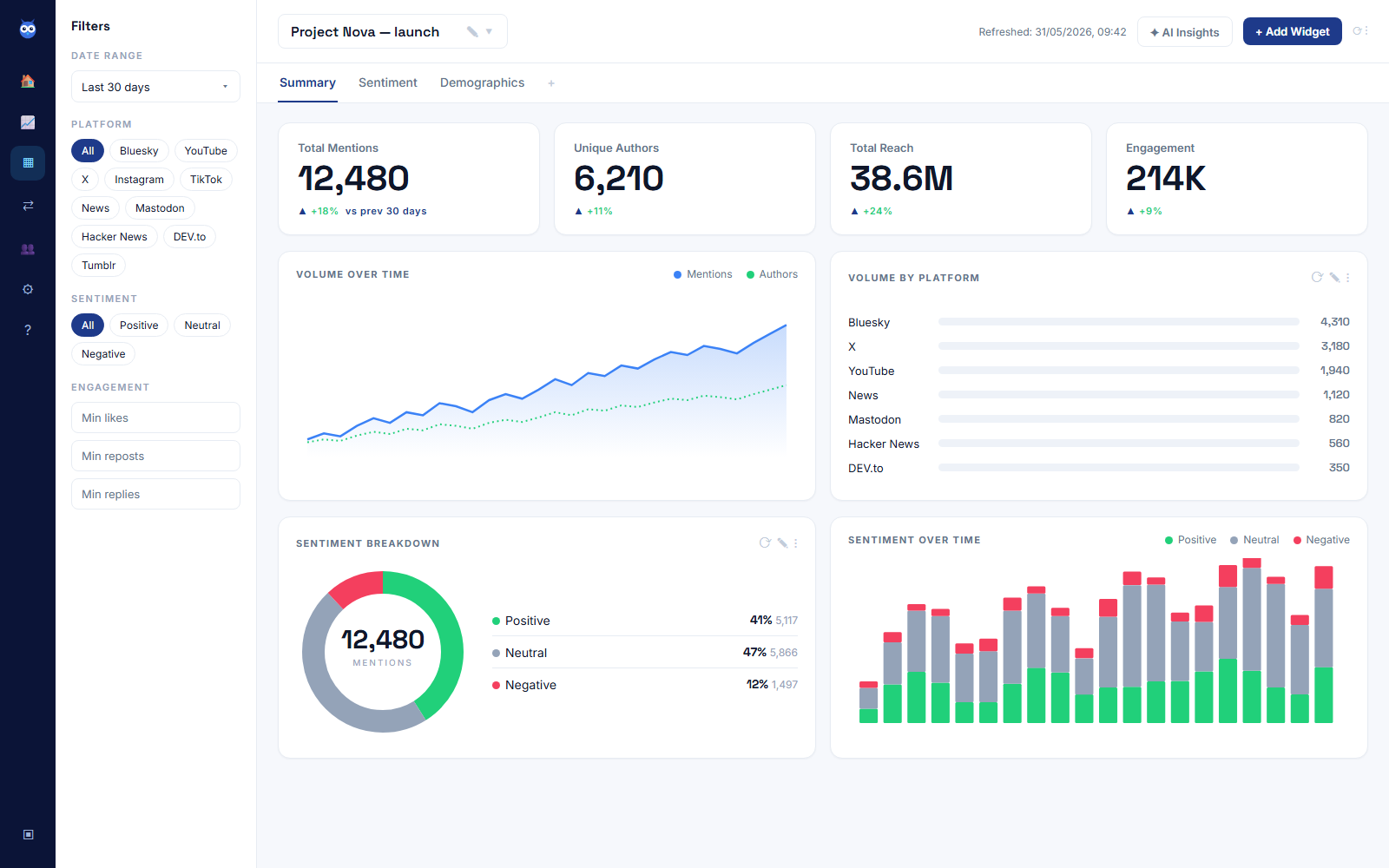
That's the gap social listening fills. Instead of guessing what your audience wants, you read what they're already saying on social networks, in the news, on forums and on review sites, and you let the conversation set your agenda. Babel42 searches a dozen networks from a single query: describe what you want to track in plain English, the AI assistant turns it into a precise monitor, and the topics, trends and voices that matter land on one customisable dashboard.
Here are five practical ways to put it to work.
1. Mine your industry's conversations for pain points
To understand what your customers want, you have to go where they talk about it: social media, forums, review sites. Babel42 searches all of them through one query, pulls in every public mention of your topic, and scores each one by reach and sentiment.
The trick is to start with topics, not your brand name. Pick the phrases your customers would actually type, and give each theme its own monitor rather than cramming everything into one catch-all query. "Property prices" and "letting agent fees" are different conversations, and they deserve separate views.
Say you sell real estate. Search for what people are saying about property prices or availability in your area, then filter to the mentions with negative sentiment. What you're left with is a list of the exact problems your clients need solved, in their own words. The same works for SaaS: listen to your category and you'll hear which features people care about, which ones they miss, and which competitor decisions they grumble about.
Sentiment tells you how people feel; engagement tells you what resonates. Babel42 shows both, alongside the domains being shared most in your topic, so you can see not just what your audience complains about but which articles and ideas they pass around.
If you write content, your editorial calendar is now written for you: the pain points your audience airs in public. If you build product, your feature backlog gets the same treatment, straight from the people who'd use it.
2. Find influencers who will answer your email
If you operate in fitness, sport or another broad industry, you already know who the top-tier influencers are. You also know they're hard to reach and rarely within budget.
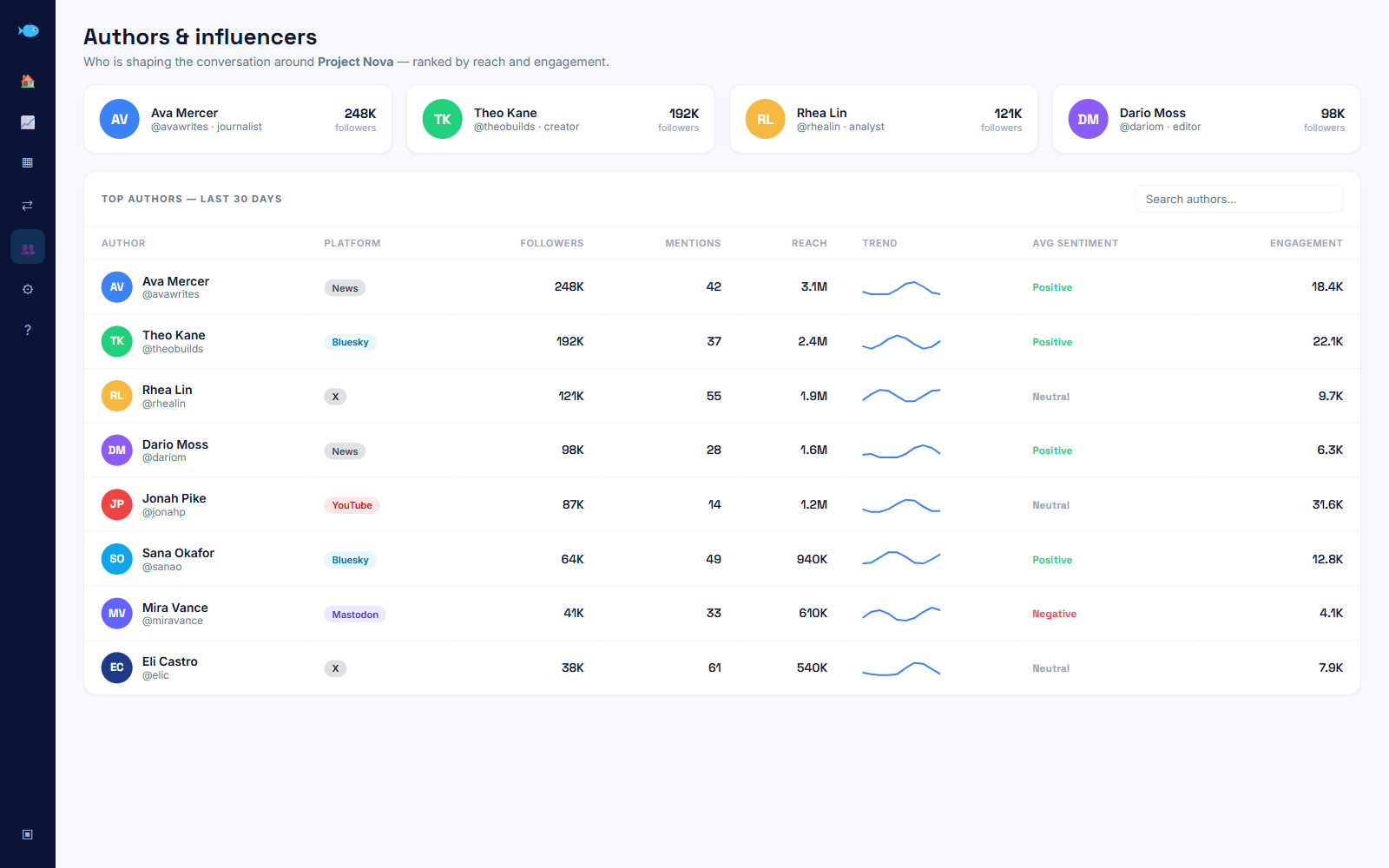
The better play is one level down. Babel42 ranks the authors and creators behind your topic's conversation by reach, engagement and sentiment, so you can filter for the people active in your specific niche who are growing the way your brand is. Expect a small group to dominate whatever you are watching. According to Pew Research Center's "Contending with the 80/20 rule when studying online behavior", "the most active 10% of Twitter users produce 80% of all tweets from U.S. adults". A mid-sized creator whose audience overlaps yours, and who's already talking about your space, will usually do more for you than a celebrity shoutout. Better still, they'll answer your email.
When you spot a promising voice, add them to a list. Lists in Babel42 let you follow their future posts, filter the conversation down to just your shortlist, and keep a running pipeline of partnership leads instead of a forgotten spreadsheet. Reach out early, engage with their work genuinely, and you're building a long-term relationship rather than renting a one-off post. Whichever it turns out to be, if money or free product changes hands it has to be disclosed, and the US Federal Trade Commission's "Endorsement Guides: What People Are Asking" puts the obligation on the brand as well as the creator.
There you have it: instead of follower counts and bot-inflated profiles, you're finding the people who genuinely move your audience, and building a network of partners and leads around them. We've written a fuller playbook on this in finding new partners through social listening.
3. Run competitor analysis and measure share of voice
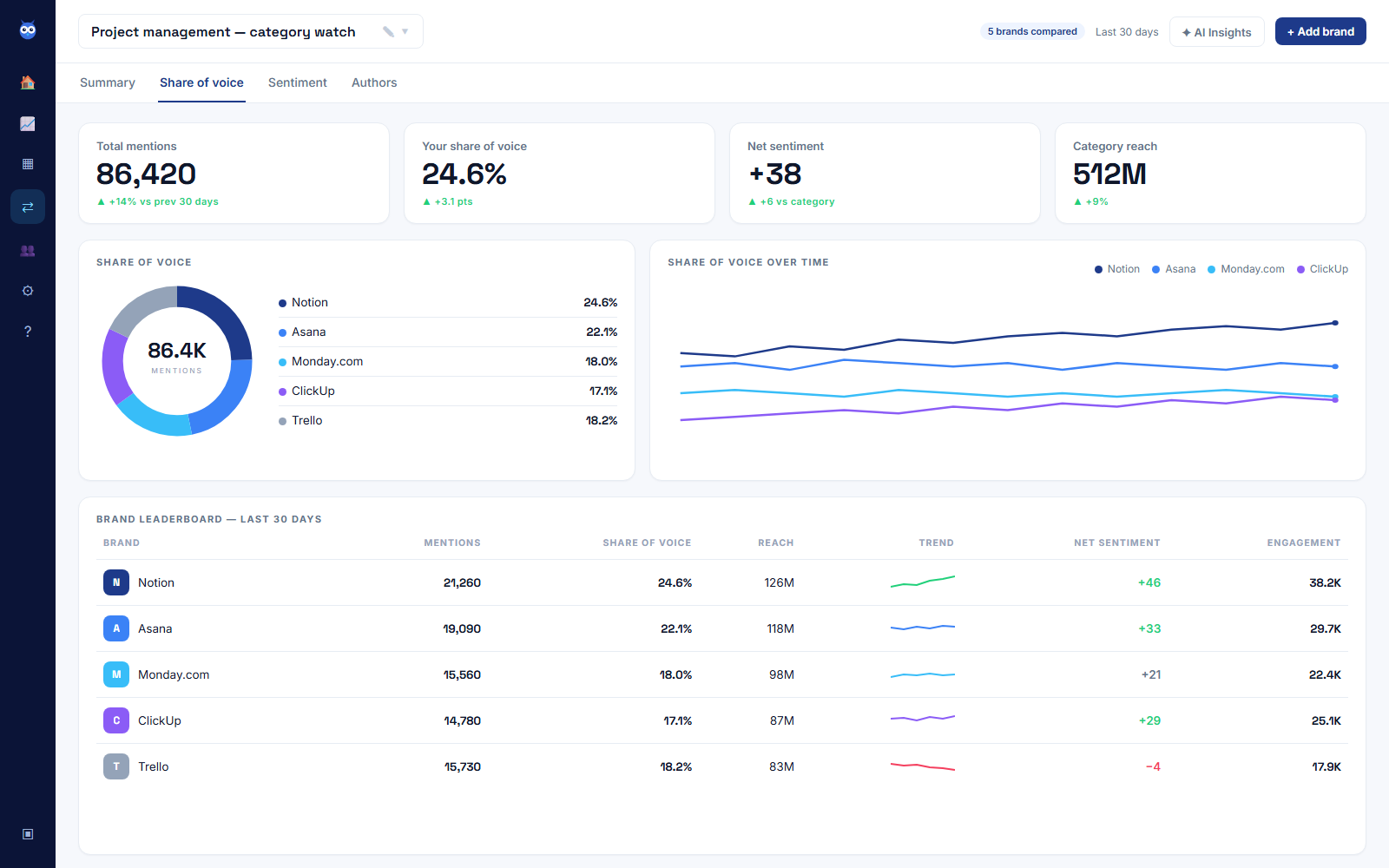
Once you've got your industry conversation from step one, add a keyword list of your competitors' names and lay it over the top. Now the same dashboard answers a different question: of all the talk in your market, who's getting it? That's share of voice, and it shows you at a glance which competitor is dominating the conversation, who's gaining, who to learn from and who to ignore.
Then go a level deeper with a monitor dedicated to competitor brands. Listening to what their customers say is the cheapest market research you'll ever do: the things they praise tell you the table stakes, and the things they complain about tell you exactly where your unique selling points should be. A thread of frustrated customers asking "is there an alternative to X?" isn't just insight. It's a list of warm leads.
4. Look after your own brand and reviews
Your own name is the one search you should never stop running. A brand monitor in Babel42 surfaces mentions, complaints and feedback as they're collected, so you can respond while the conversation is still warm. And you don't have to live in the dashboard to keep up: set up an alert and Babel42 will email you when someone mentions your brand, when a mention turns negative, or when volume suddenly spikes, so the moments that need you don't depend on you refreshing a feed. If that alert ever fires for real, here's a founder's guide to handling a reputation wobble.
Reviews deserve their own monitor: Babel42 covers Trustpilot and Google reviews, which means a one-star write-up doesn't sit unanswered for a week while it quietly does damage. And remember that replying well in public is organic marketing. Prospects read those threads, and a calm, helpful response to criticism often says more about your brand than the post that prompted it.
It works in the other direction too. The positive mentions your monitor surfaces are testimonials, case-study candidates and shareable posts you'd otherwise never have seen. Ask, thank, reshare.
5. Feed your SEO and your visibility in AI answers
Every conversation your monitors collect is keyword research in your customers' own words. The phrasing people use when they complain or ask for recommendations is the phrasing they type into a search box, and it's often nothing like the language on your website.
Forums and Q&A communities are especially rich here. The questions people ask on Stack Exchange, Hacker News or niche forums are content briefs handed to you, and both communities publish open APIs, Stack Exchange's and Hacker News's, so you can read them at volume rather than by hand.
Write the genuinely useful answer, in the asker's vocabulary, and you're producing exactly the kind of page Google describes in "Creating helpful, reliable, people-first content", and the kind of source AI assistants tend to draw on when they summarise a topic for someone. As more buying research starts with a question typed into a chatbot, being the clear, specific answer is how you stay visible. There is no separate trick to learn for the AI side of this, at least not according to the one vendor that has said anything official: Google's "AI features and your website" states that "there are no additional requirements to appear in AI Overviews or AI Mode, nor other special optimizations necessary".
The most-shared domains in your topic round out the picture: they show you which publications your audience trusts, which is your shortlist for guest posts, digital PR and the mentions that earn links.
Start with one afternoon
You don't need a strategy offsite to begin. Set up a topic monitor for your industry's pain points, a keyword list for your competitors, and a brand monitor with alerts. That's an afternoon's work, and each of the five plays above falls out of those three searches.
Babel42's free plan includes 500 mentions a month, two monitors and five networks, with AI sentiment built in and no credit card needed. Hear what the internet's saying.