If your LinkedIn feed has felt oddly hollow lately, rows of confident-sounding posts that say very little, you're not imagining it. Neither is LinkedIn. The platform has spent the last six weeks fighting what it calls AI slop, and it just published numbers to back the crackdown up. Generic AI-written posts are losing real reach, not just goodwill. Here's what actually changed, and what it means whether you post there yourself or just work with people who do.
What is LinkedIn's "seems like AI slop" button?
On 30 July 2026, LinkedIn added a new option to the three-dot menu on every post: "Seems like AI slop". Click it, and the person who shared the post gets a private note in their own analytics dashboard flagging that readers think their writing looks machine-written, rather than any public label or takedown. LinkedIn's chief product officer, Hari Srinivasan, framed it as a priority for the platform: "people come to LinkedIn to connect with real people and share their real perspectives, ideas, and expertise" (TechCrunch, "LinkedIn adds a button to report AI-generated 'slop'"). Alongside the button, LinkedIn pulled its "enhance your post" tool, which had used AI to rewrite a draft, and replaced it with a plainer proofreading feature that corrects grammar and spelling without touching the writer's own voice (Fortune, "LinkedIn adds a 'seems like AI slop' button after blocking billions of automated comment attempts in the last few months"). The company also says it now blocks hundreds of thousands of automated comment attempts a day, a separate defence against bot activity rather than the slop button itself.
The numbers behind the crackdown
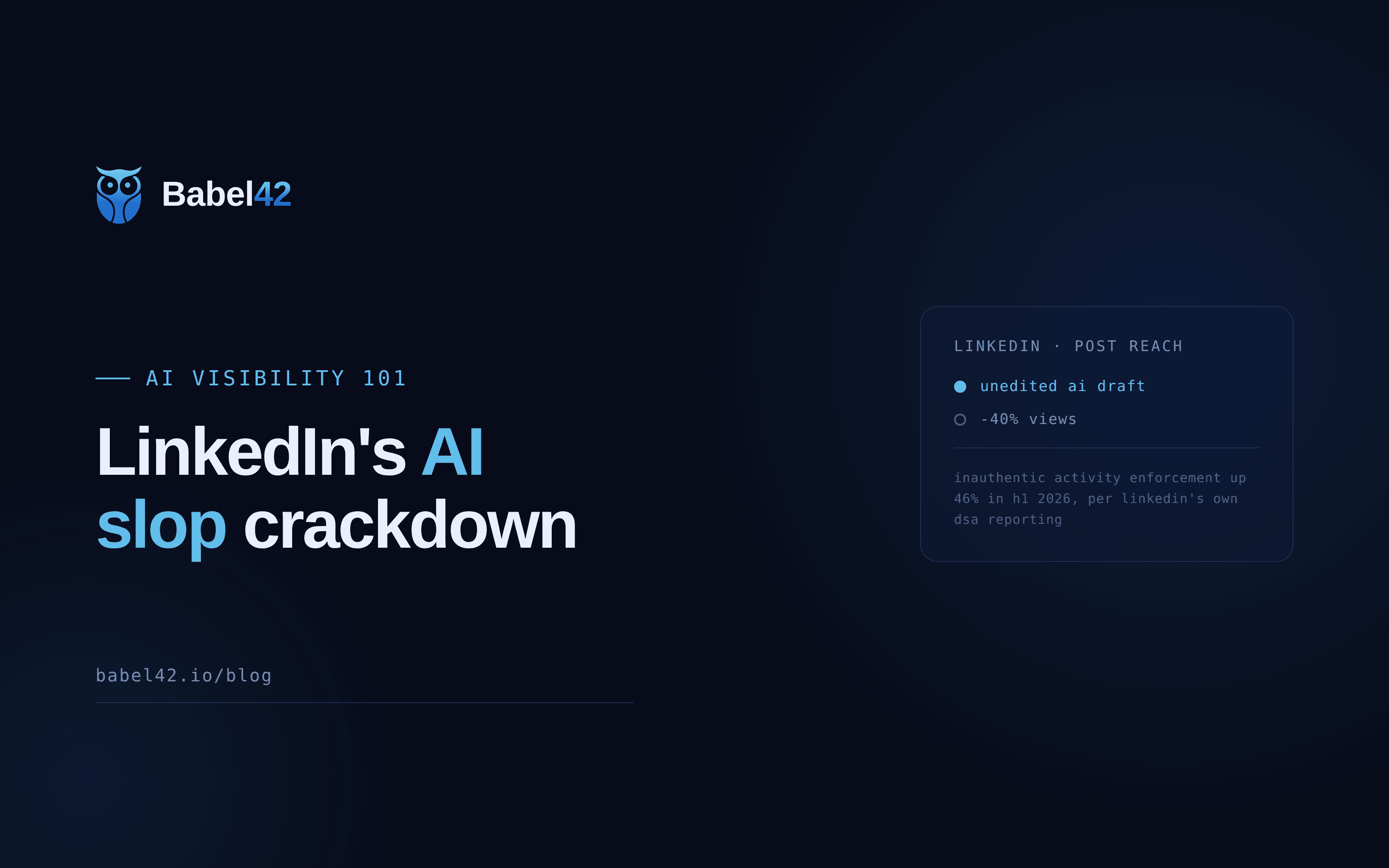
Two data points landed in the weeks after launch. Together, they're the reason this is worth ten minutes of attention rather than a shrug. First, according to LinkedIn's own transparency reporting under the EU's Digital Services Act, detected inauthentic activity rose 46% in the first half of 2026 compared with the second half of 2025, a category that covers engagement pods, third-party automated posting tools and fake profiles, not only AI-written text specifically (Social Media Today, "LinkedIn increases push against inauthentic activity").
Second, and more specific to the slop button itself: more than a million people clicked it in its first three weeks. According to LinkedIn's own figures, posts that are simply copy-pasted from an AI tool, unedited, are now getting roughly 40% fewer views than they would have before the button launched (Fortune, "Over 1 million people clicked LinkedIn's 'seems like AI slop' button"; Engadget, "LinkedIn says its AI slop button is working"). Both figures come from LinkedIn's own reporting, relayed by that press coverage, not an independent audit. Worth keeping in mind as context, not as a universal number for any one account.
Does this mean LinkedIn is against AI-assisted writing?
No, and the distinction matters if you're wondering whether to stop using AI tools for LinkedIn drafts altogether. The pattern in the reporting is specifically about content that reads as generic and unedited: a post that's visibly a first draft from a chatbot, with no specific detail, opinion or example that only the actual author would know. LinkedIn's own product change points the same way: it didn't remove AI assistance from the writing flow, it replaced a tool that rewrote your words wholesale with one that proofreads them instead, which is a difference of degree, not a ban. If you use an AI tool to get a first draft down and then add your own specifics before publishing, that's a different thing to the platform than posting what the tool gave you unread.
What does this mean if you don't run your own LinkedIn presence?
Plenty of B2B marketing teams don't write their founder's or executives' LinkedIn posts personally, they brief a ghostwriter, an agency or a junior team member, and increasingly, that person's first move is an AI draft. If that draft goes out close to unedited because nobody has time to add the one detail only the actual person would know, it's now the kind of post LinkedIn's own numbers say gets measurably less reach, on top of reading generic to a human anyway. The discipline that answers it is the one social listening has always been for: watching what actually lands with real people, rather than assuming a post did well because it went out on schedule. Babel42 gives you that read across the public networks it covers, from Bluesky and YouTube to Hacker News, DEV.to, Trustpilot and news, so you can see whether the message in those executive posts is being repeated anywhere by anyone other than you.
The wider pattern
LinkedIn isn't the first platform to draw a line between real engagement and manufactured engagement, and it won't be the last. What's notable here is that a major platform put a number on it publicly: a specific, measurable reach penalty tied to a specific kind of post, rather than a vague policy statement about quality. That's a preview of where other channels are heading too, as more of the content flowing through any feed is at least partly AI-assisted and platforms look for ways to keep telling genuine signal from manufactured volume. The same question is worth asking about your own brand's presence anywhere people can fake activity at scale: are the numbers you're looking at describing what real people actually did, or what a script made it look like they did?
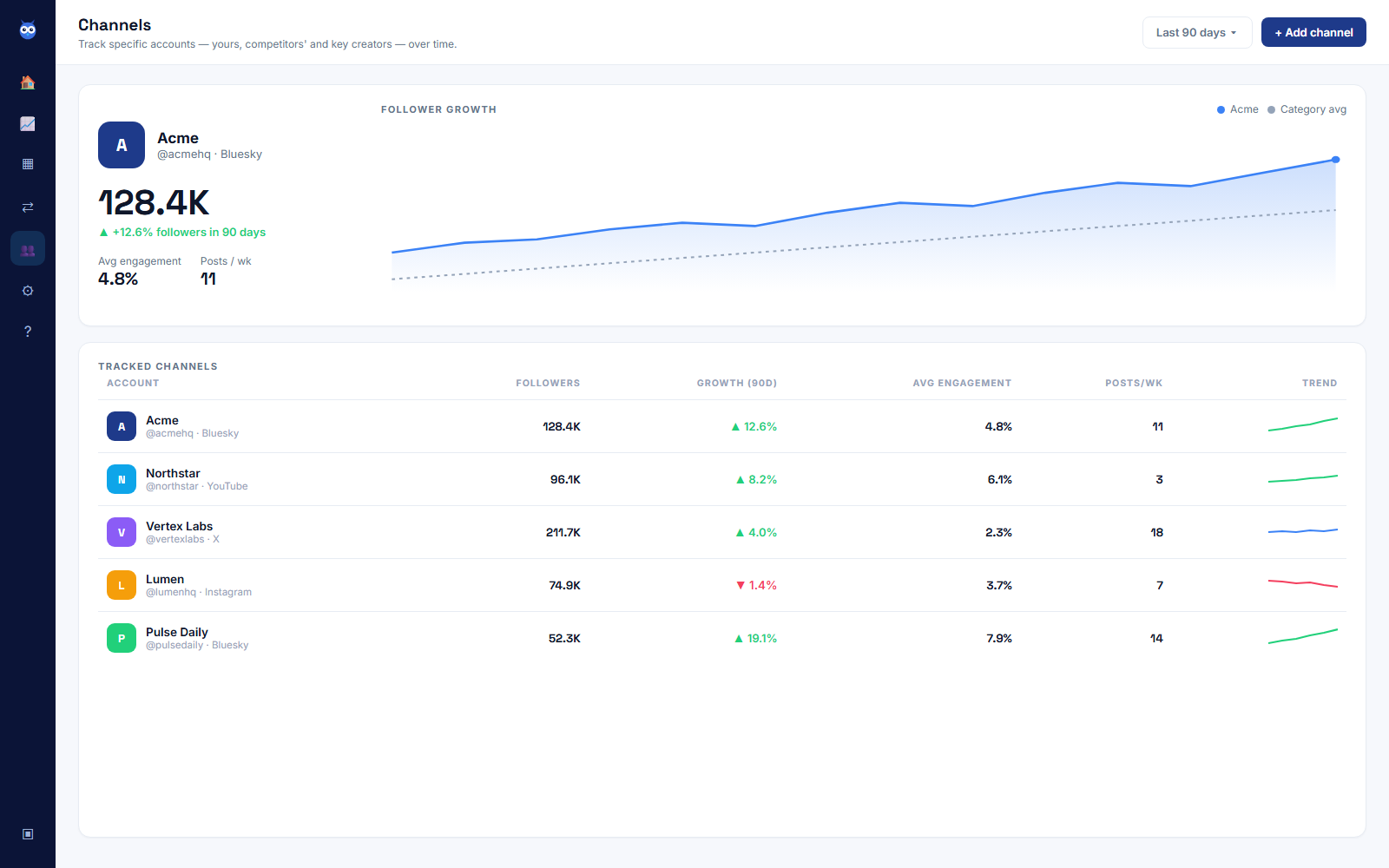
That's the same reason a sustained growth curve is worth more than any single post's numbers. Babel42's Channels feature tracks an account's follower growth, average engagement rate and posting cadence over time, alongside a category average, which is a harder thing to fake convincingly for months on end than one post's like count is for an afternoon.
Two things worth doing this week
- If someone else drafts your (or your executive's) LinkedIn posts, ask what happens between the AI draft and publish. One specific number, example or opinion that only the actual person would know is the difference between a post that reads as generic and one that doesn't, regardless of what wrote the first version.
- If you're already tracking engagement on LinkedIn, check whether a "high-performing" post's activity looks organic. A sudden clump of comments from accounts with little else in common, all landing in the same narrow window, is the pattern engagement pods produce, and it's worth more scrutiny than the raw count suggests.
The short version
LinkedIn added a "seems like AI slop" button on 30 July 2026 and replaced its AI post-rewriting tool with a plain proofreader. It now reports two numbers behind the change, according to its own EU transparency reporting: detected inauthentic activity (engagement pods, automated posting and fake profiles) up 46% in the first half of 2026, and roughly 40% fewer views for posts copy-pasted unedited from an AI tool since the button launched. None of this bans AI-assisted writing. It targets content that reads as generic because nobody added anything only the real author would know.
If you don't manage your own LinkedIn presence, the same question still applies to whoever does it for you: what happens between the draft and the post going out? And if you're judging any platform's engagement by the numbers alone, on LinkedIn or anywhere else, the same discipline that makes social listening useful is the one worth applying here too. Watch what's sustained over time, not what one post claims. We've written before about that same real-versus-manufactured question on the paid side, when Google's AI Max started writing ad copy on marketers' behalf, and on the measurement side, in how to track brand reputation on an ongoing basis rather than waiting for a crisis to look.