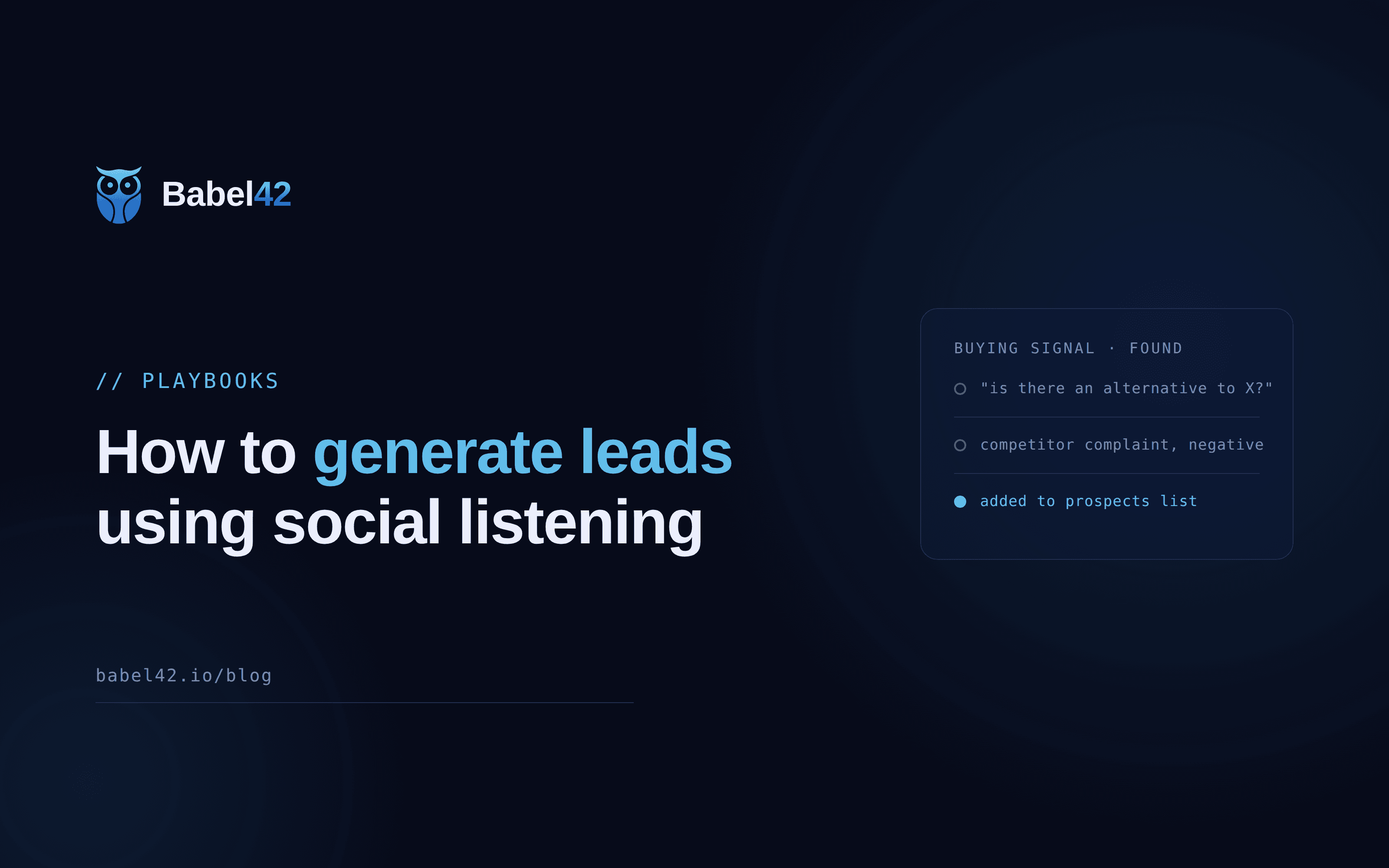
Somebody asks "is there an alternative to X?" in a Hacker News thread. A prospect complains on Bluesky that their current tool is too slow, too expensive, or missing one feature you happen to have. A founder posts looking for recommendations in your category. None of that shows up in your CRM, because nobody filled out a form. It shows up in public conversation, which is what social listening is built to watch.
Most guides to social listening stop at brand monitoring: track your name, catch complaints, reply fast. That's real, and worth doing, but it treats listening as a support function. Used differently, the same monitors surface people who haven't found you yet but are actively describing the problem you solve. This is a practical playbook for that half: which conversations are actually worth watching for leads, and a routine for turning what you find into warm outreach rather than a spreadsheet nobody opens.
What a listening-sourced lead is
Start with what this actually produces, because it is narrower than a bought list and, for a B2B audience, often more useful: people who are already talking about the problem, in public, in their own words, at the moment they're thinking about it. That's a warmer starting point than a cold list, but it's still a starting point. You still have to notice the thread, decide it's worth a reply, and say something a real person would say. Nothing here replaces outbound; it changes when and to whom you do it.
Watch for the moments people are shopping
Not every mention of your category is a lead. The ones worth a second look tend to fall into a few recognisable shapes:
- "Is there an alternative to X?" The single highest-intent phrase in this whole playbook. Anyone typing it has already decided they want to switch, they just haven't decided to what.
- Competitor complaints. "X is so slow", "why does X charge for this", "wish X had a free plan." Whatever they're frustrated about is a feature you can lead with, if it's genuinely true of your product.
- Direct requests for recommendations. "What do people use for [category]?" posted to Hacker News, a Stack Exchange site or a developer forum. Both run open, documented APIs, Hacker News's and Stack Exchange's, which is why these communities are watchable at all where others aren't. These are often answered by three other vendors before you even see them, so speed matters.
- Problem statements with no product named yet. Someone describing the pain without naming any tool at all. Earlier in the buying journey, but a real opportunity to be first with a useful answer rather than a pitch.
Set up a monitor for your product category using plain English (Babel42's AI query builder turns a description into the underlying Boolean search, and you can refine it with AND/OR/NOT once it's running), and a second monitor with your top two or three competitors' names as a keyword list. Between the two, most of the shapes above will surface without you having to go hunting for them.
Let competitor complaints do the qualifying for you
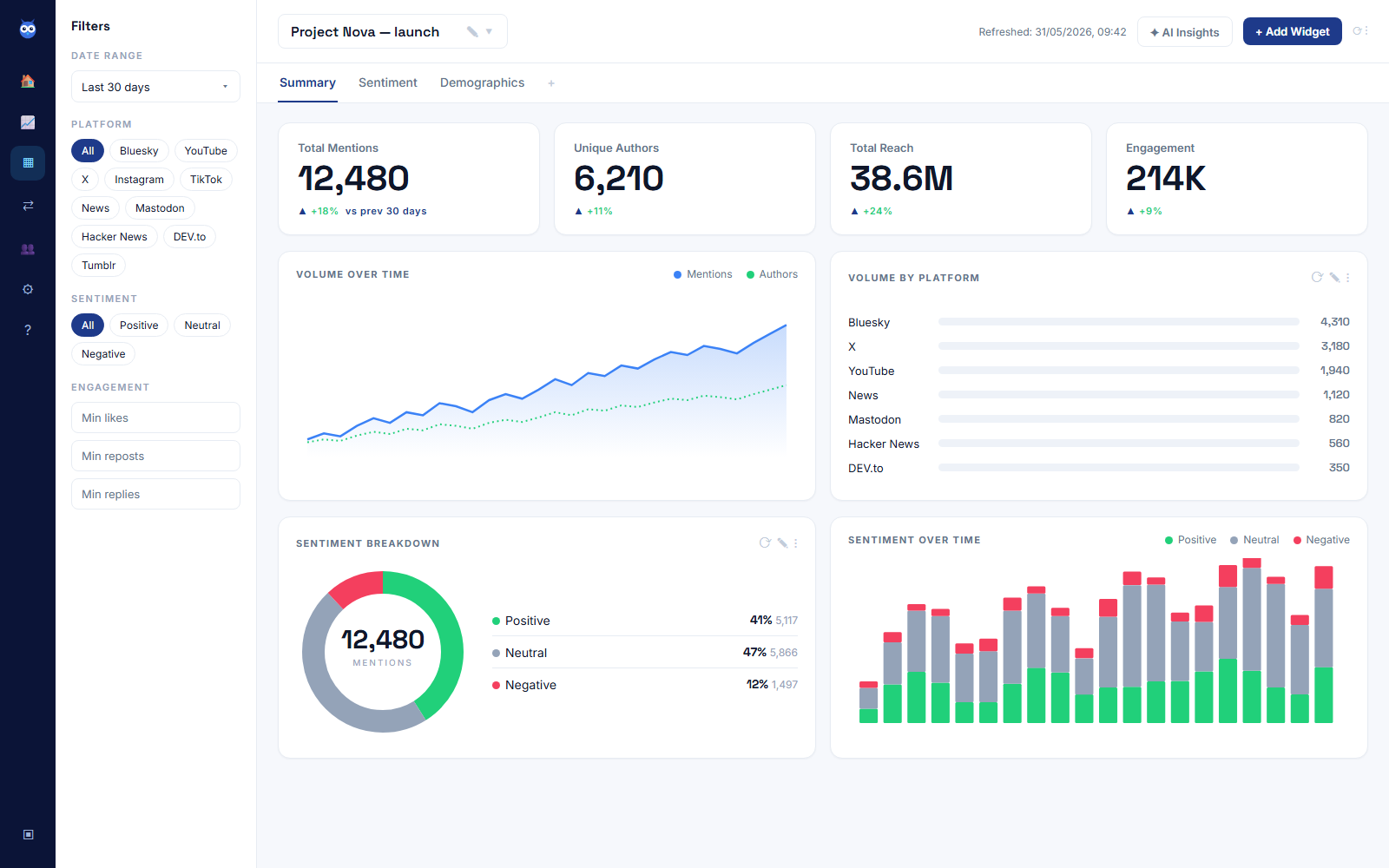
A competitor monitor does double duty. Babel42 tracks named competitors alongside your own brand and shows share of voice between them, which tells you who's currently winning the conversation in your category. That's useful context on its own, but the more direct lead source sits one level down, in the individual mentions: filter that same monitor to negative sentiment, and you're looking at a list of people on record, in public, unhappy with the tool you're trying to displace. Read the posts before you act on the label, because the label is an estimate: in Van Hee et al., "SemEval-2018 Task 3: Irony Detection in English Tweets", the best of dozens of competing systems reached an F1 of 0.71 on deciding whether a tweet was ironic, and a sarcastic compliment is exactly the kind of post you don't want to answer with a pitch.
That filtered list is worth treating differently from generic outreach. The person has already named their problem and their current vendor. You don't need to guess at a pitch; you need to reply to the specific thing they said, and only if your product genuinely solves it. If it doesn't, better to skip the thread than to force a fit that isn't there. A wrong reply to a public complaint is more visible, and more damaging, than a wrong cold email nobody else sees.
Build a shortlist instead of chasing one thread at a time
A single good mention is nice. A running shortlist is what turns this into a repeatable source of leads instead of a lucky find. Babel42's Lists let you save authors to a reusable list and keep tracking what they post afterward, so a promising thread doesn't end the moment you close the tab.
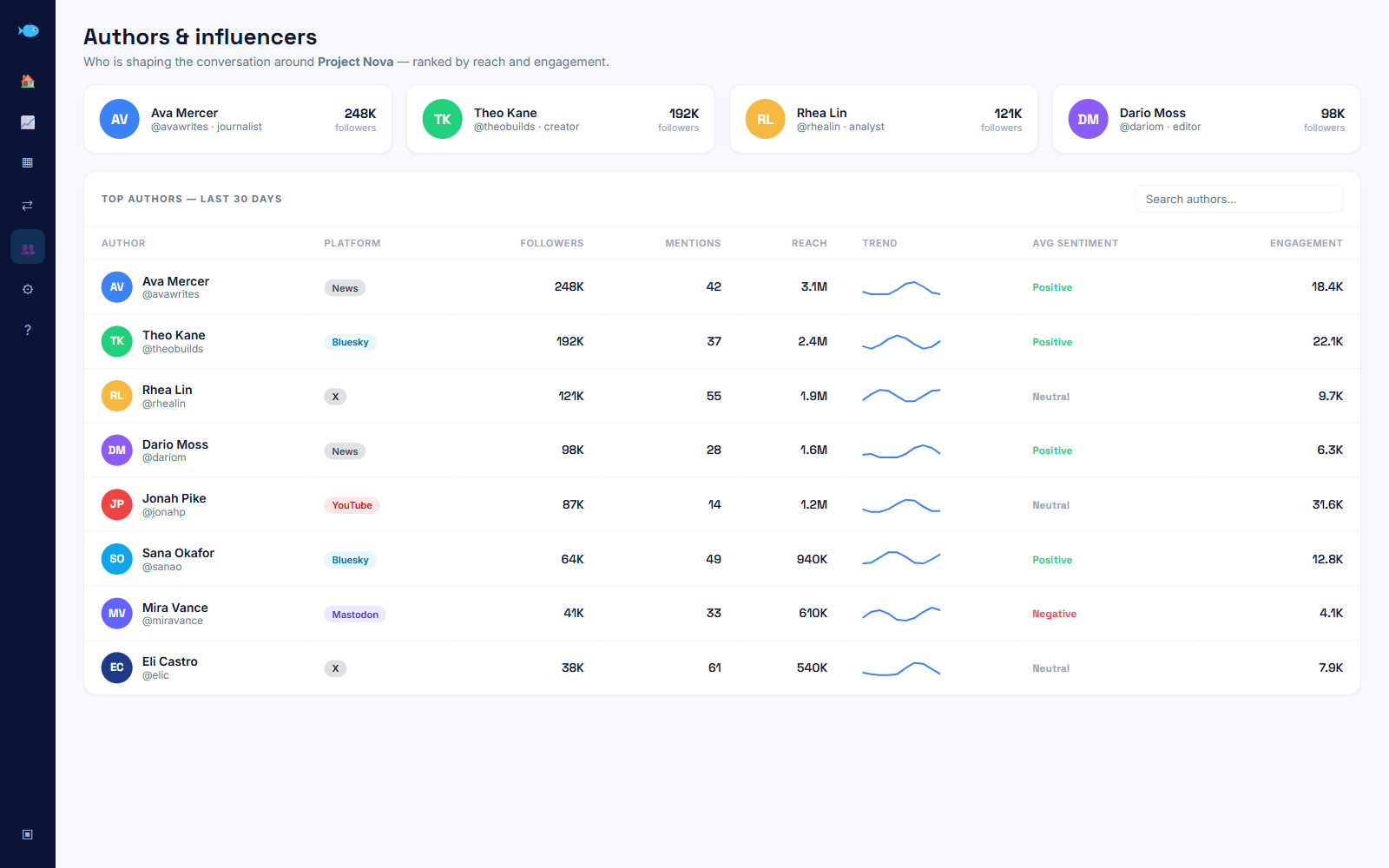
Two lists are worth keeping from day one:
- A prospects list, for anyone who's posted a genuine buying signal, whether or not you've reached out yet. Revisit it weekly rather than trying to act on every mention the moment it lands.
- A competitor-customers list, for people who've mentioned using a rival tool at all, complaint or not. Not every entry is ready to move, but when their contract's up for renewal or something breaks on the competitor's side, you already know who to talk to.
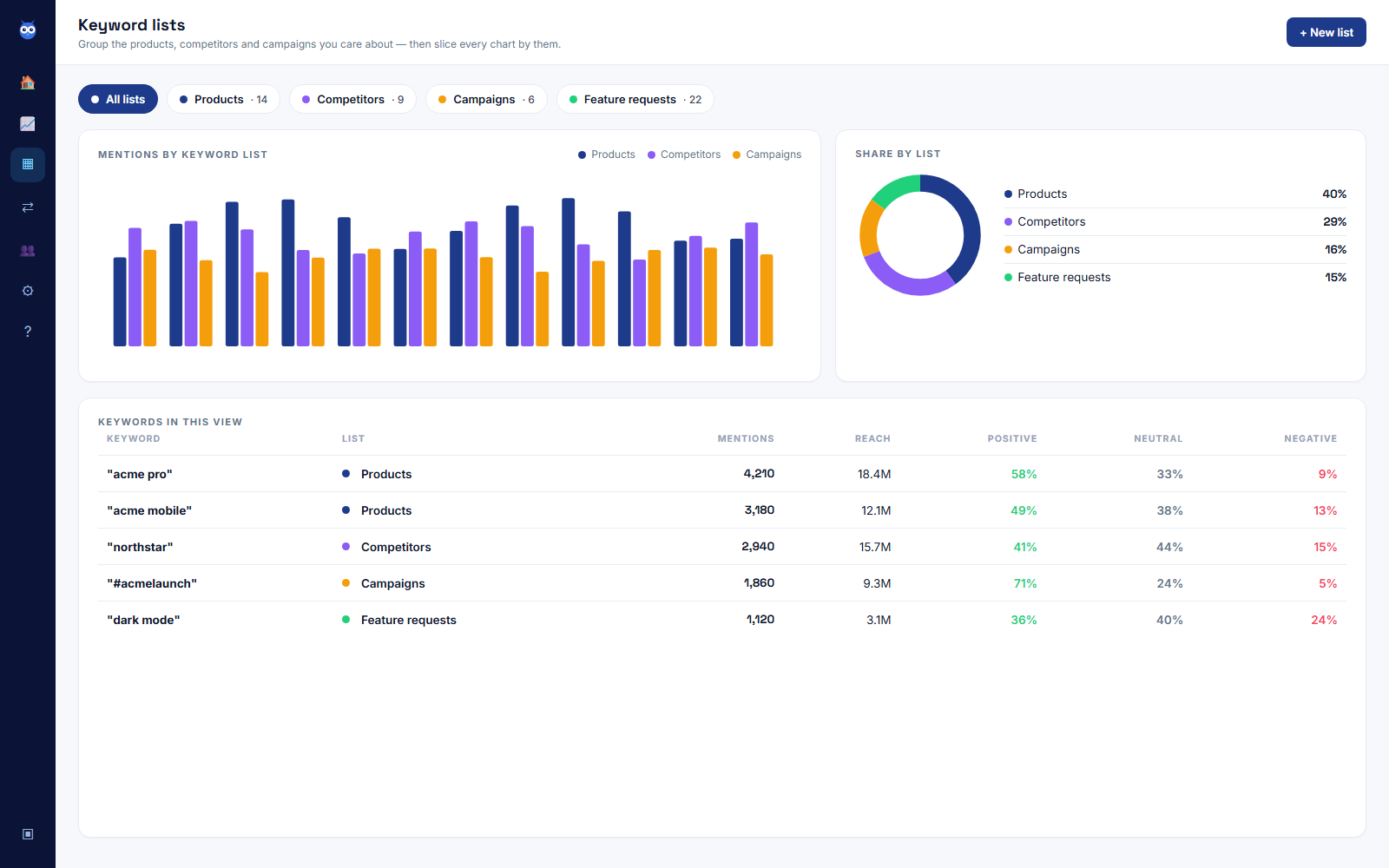
Keyword lists work the same way on the topic side: group your product category, your top competitors and any campaign-specific terms so you can slice the dashboard by whichever one matters that week, instead of one catch-all monitor trying to answer every question at once.
Reach out like you read the thread, because you did
The advantage of a listening-sourced lead is context, so use it. Reference the actual thing they said, not a template with their name dropped in. "Saw your post about [specific complaint], here's how we handle that" reads completely differently from a cold "I noticed you might be interested in our product." One respects that you read their words; the other announces that a tool found their name.
This is also where speed genuinely matters. A thread asking for recommendations gets answered fast, often within hours, and the first few honest replies tend to shape the rest of the conversation. Alerts help here: Babel42 can notify you the moment a monitor sees a volume spike, a sentiment dip, or a mention from a listed influencer, so a promising thread doesn't sit unread for three days while you happen to check the dashboard.
A weekly routine that doesn't take over your week
Consistency matters more than intensity here. A workable version:
- Monday, ten minutes: check the category and competitor monitors for anything from the weekend, add new prospects to your list.
- Twice midweek, five minutes each: skim alerts, reply to anything time-sensitive (a live "recommend me something" thread won't wait for Friday).
- Friday, fifteen minutes: review the prospects list end to end, reach out to two or three, and note which mentions didn't lead anywhere so you stop revisiting dead ends.
That's under an hour a week once the monitors are set up, and it compounds: the shortlist only grows, and the pattern-matching (which phrases actually convert, which competitors leak the most frustrated customers) gets sharper every week you keep at it.
What to expect from this, and what it costs
This sources leads, and it works hardest in categories with an active public conversation, which covers most B2B software. Babel42's social listening gives you 500 mentions a month, five networks and two monitors on the free plan, enough to run the category and competitor monitors above; X is a paid add-on on any paid plan, since it's billed per post through the official API rather than scraped. Communities behind a login, Reddit among them, are worth a manual search alongside the monitors when your buyers gather there; Reddit's Data API Terms require a separately negotiated agreement for any commercial use, so no tool covers it without one. Real leads come out of the free tier. The reply you send is still yours to write, and that is the part that decides whether any of this works.
If you haven't set up listening at all yet, start with how to do social listening for free, which covers the monitor setup this playbook assumes. And once leads are flowing in, how to grow your organic marketing with social listening covers the content and partnership side of the same conversations, while how to monitor competitor activity goes deeper on the competitor monitor this playbook only sketches.